


Wasturwan Forests
- villageladhoo
- Feb 25, 2022
- 3 min read
Updated: May 17, 2022
Kashmir, admired by all over the world for it's uparallel beauty and beautifully addressed by the poet Amir Khusro as, " گر فردوس بہ رویے زمین است ہمی است، ہمی است، ہمی است" "If there is paradise anywhere in the world It's this, it's this, it's this"
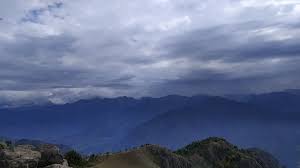
The praise is attributed to it's landscape, rivers, mountains, waterfalls, meadows and the list goes on. Wasturwan / وسترون , a dense and green forest range located in mid Himalayan range of South Kashmir’s Pampore tehsil holds it own rank in the list. It has a very beautiful meadow atop a mountain range at village Ladhoo. The range stretchs from Harwan, Dachigam National Park, Khonmoh, Khrew, Wuyan, Shar-i-Shalli and Tral. It offers variety views of Kashmir valley like the views Pir Panjal and Himadri or greater Himalayan ranges. The view of the course of river Jhelum can also be enjoyed.
Wasturwan has great historical and religious significance which is addressed by the famous sufi saints like Nund Rishi (r.a) and Wahab Khar (r.a) in the sayings .The beauty of the of whole forest range is undiscovered and yet to come on a tourist map of Jammu and Kashmir. But, this range is a very favorable destination for trekking so recently the government recognized the trekking route to Wasturwan via Gousen nar area of Ladhoo.
The forest range had chosen by then Maharaja Hari Singh (1925–1947) for his hunting expeditions. He would use a special and traditional horse riding route via Shar-i- Shalli, whose remnants are still present, to reach Tral Shikargah-a virgin and undisturbed meadow located at a junction of Wasturwan. Presently, this is the short cut route for people of Pampore to reach Tral by foot or by horse ride. Wasturwan in it's topology resembles the Gulmarg but its temperature does not drop quickly as it is located on a lower altitude than Gulmarg i.e. 2,130 m above sea level.
Under its foothills there is a small historical palace in the village Shar-Shali in which Maharaja used to stay during summers in order to remain in constant touch with nature. Now a fenced compound comprising a small building under the shade of chinar with two small ponds at the periphery of the lawn connected via channel.
The famous sufi saints of Kashmir: Wahab Khar (r.a) and Sheikh-ul-Alam (r.a) also known as Nund Rishi chose Wasturwan as their destination for spiritual enlightenment which signifies its religious importance. The pond where Wahab Khar (r.a) used to worship and the stone on which Sheikh-ul-Alam (r.a) worshipped are still located there. The shrine of sufi saint Wahab Khar (r.a) is also located under foothills of this mountain range. So, this mountain range is revered for being a dwelling of holy saints of the valley.
At the top, there are three natural rain- fed dams, locally known as 'trag' and few Bakarwal huts located in the vicinity as they visit the meadow regularly every season to feed their livestock. Besides there are two graves surrounded by a wall made of rocks to whom Bakarwals residing there call 'Pir Babas'. Although there is no authentic information about the identity of the graves. According to reputed Islamic scholar and Ex-HOD Department of Arabic at Kashmir University professor, Abdul Gani Azhari, “These graves are of Arab scholars who came to propagate Islam and were martyred by non-Muslim rulers. They were buried there so that nobody could get whiff about them.” But a local employee of Archaeological Department Peer Shamsudeen said, “Our department has no information about such graves.” Wasturwan forests are also rich in diversity of flora and fauna. The people used to hunt and collect the herbs of medicinal value like Kala Zeera (Bunium Persicum Bioss), Wopal haak (Dipsacusinermis wallich), Pambe chalan (Rheum emodiwa) ,Wanawangun (Podophyllum hexandrum Royle) and morels. Kala Zeera is a high value herbaceous spice widely used for culinary, flowering, perfumery and carminative purposes. Wanawangun/ Banwangun is used as anti-cancer drug. Beside these it used to house the good quantity of Birch trees (now endangered), locally known as 'Burza Kul'. It's barks were earlier used as paper and is of great historical significance. Another endangered species, Kashmir stag|Kashmiri Stag/Hangul (the UT animal) used to roam freely in these forests, now restricted to Dachigam National Park area only.


Comments